
Two Descriptions of One Agreement
On 18 September, President Trump announced on Truth Social that the United States had reached an agreement with Denmark and Greenland giving it “permanent control over security, and all other needs, in Greenland” at no cost to the US. He called it an “Infinite Life” agreement, said America would “FOREVER have the complete ability to do what is necessary,” and promised to “immediately begin” building a large military presence on the island.
Copenhagen described the same deal differently. Danish Prime Minister Mette Frederiksen said it “recognises the sovereignty and territorial integrity of the Kingdom and the Greenlandic people’s right to self-determination.” Greenland’s premier, Jens-Frederik Nielsen, said it “recognises Greenland’s interests and our place in the international cooperation.” The Washington Post’s headline summed up the gap: a deal that stops short of US control.
Both descriptions can survive the text, because they describe different things. One is about what the US may do on the island. The other is about who owns it.
What Is Actually Agreed
Based on what the three governments have said publicly, the deal clears the way for a larger US military presence on the island. It bars non-NATO powers — China and Russia are the obvious targets — from establishing bases, and restricts investment in Greenland by adversary states. Secretary of State Marco Rubio said Greenland “will forever be part of the strategic defence area.”
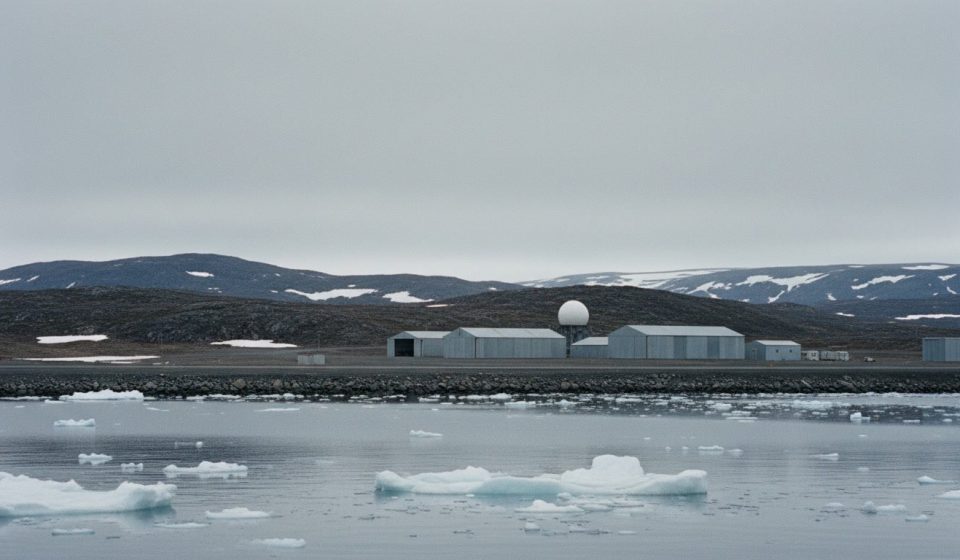
None of this starts from zero. The US has operated in Greenland under the 1951 Defense of Greenland agreement for seventy-five years, and runs Pituffik Space Base in the north-west for missile warning and space surveillance. What changes is scope and permanence, not presence.
And it is not yet in force. The three governments expect to sign at the UN General Assembly in New York next week, after which the agreement must be approved by the parliaments of both Denmark and Greenland before it takes effect. “Infinite” is a description of an agreement that currently has no legal force at all.
How It Got Here
The route matters, because it explains why Copenhagen is emphasising sovereignty so hard. In January, Trump threatened steep tariffs to pressure Denmark into giving up the territory, then backed down. In July he revived the ambition to annex the island outright.
Europe answered with money. Around 7 September, Commission President Ursula von der Leyen announced an additional €200 million for Greenland over two years, aimed at subsea cables and satellite connectivity, hydropower and sustainable mining. The Commission has also proposed doubling direct EU aid to €530 million in the 2028–2034 budget.
Eleven days later, the security deal landed. Read in sequence, the outcome is less a US takeover than a division of roles: Washington gets the military footprint; Brussels is buying into the economy.
The Clause That Matters
The provision worth reading closely, once the text is published, is not the basing language. It is the restriction on adversary investment.
Greenland’s economic case rests on minerals. The EU package names mining explicitly; one molybdenum development, Malmbjerg, has been cited as potentially worth up to €90 million a year to Greenland. Every such project needs capital, offtake buyers and processing, and for many critical minerals the processing capacity sits overwhelmingly in China.
So the definition of “adversary investment” — who counts, whether it covers minority stakes, offtake contracts or processing agreements, and who decides — will determine which mining projects can be financed at all. A broad definition locks in a Western supply chain for Greenland’s resources. A narrow one is mostly symbolic. Neither the Truth Social post nor the Danish statements says which it is.
What to Watch
- The signed text at the UN General Assembly. Permanent access rights and sovereignty language can coexist; how the text words “control” decides which account was accurate.
- Both parliamentary votes. The Folketing and Greenland’s Inatsisartut must approve. Greenland’s parliament in particular has independence-minded parties with every reason to scrutinise a permanent arrangement.
- The investment-restriction definition. That clause, not the base count, sets the terms for Greenland’s mining economy — and whether the EU’s new money can find projects that pass it.
If you follow critical-mineral supply chains, the practical point is simple: the military presence was already there. The new variable is a legal filter on who may fund Greenland’s resources, and it arrives just as Brussels starts writing cheques. Wait for the text before pricing anything on the word “infinite.”
Get the weekly briefing
One email a week on AI, infrastructure, policy and the supply chains underneath them. Free, and you can unsubscribe any time.