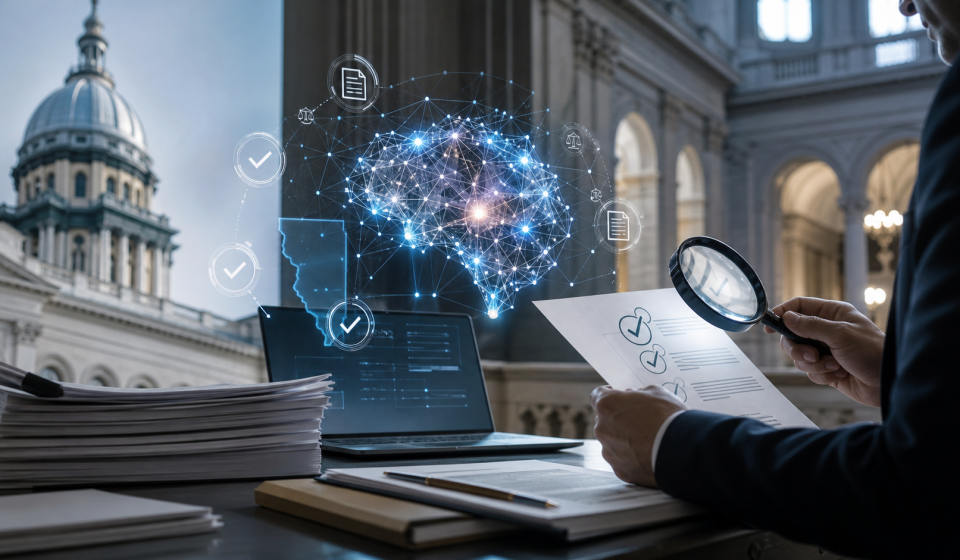

Illinois AI Regulation: New Audit Rules Target Frontier Models
Illinois is moving into one of the hardest questions in technology policy: who checks the most powerful AI systems before they affect the public? The state’s Artificial Intelligence Safety Measures Act is aimed at advanced “frontier” models and would require stronger oversight, including independent audits.
The law matters because AI regulation in the United States is still fragmented. Federal agencies have issued guidance, companies have made voluntary commitments, and lawmakers continue to debate broader rules. In that gap, states are starting to set their own expectations for safety, transparency, and accountability.
At the center of the Illinois approach is a straightforward idea: if a company builds AI systems with broad social impact, it should expect outside scrutiny. That does not settle every implementation question. Regulators still need to define audit standards, enforcement procedures, and the threshold for which systems qualify. But the direction is clear.
For developers, this kind of rule changes the operating environment. Compliance may require better internal documentation, more formal risk testing, third-party review, and longer planning cycles before deployment. Larger companies can absorb that work more easily. Smaller AI startups may find the burden harder, especially if states adopt different requirements.
That is the tradeoff policymakers now face. Stronger audits could help identify bias, unsafe behavior, security weaknesses, or misuse risks before systems reach users. Overly rigid rules, however, could slow useful products or favor incumbents with larger legal and compliance teams.
The real question is whether state-level action becomes a bridge to national standards or a patchwork that developers must navigate one jurisdiction at a time. Illinois’ move may pressure other states to act, but it may also increase calls for Congress and federal agencies to create a clearer baseline.
Either way, the signal is hard to miss. AI companies are no longer operating in a world where voluntary safety promises are the only expectation. As frontier models become more capable, public officials are beginning to demand evidence that those systems have been tested, reviewed, and governed before they are widely deployed.
For technology watchers, Illinois is worth following not because it answers every AI safety question, but because it shows where the policy debate is heading: away from abstract principles and toward audits, records, enforcement, and responsibility.
Get the weekly briefing
One email a week on AI, infrastructure, policy and the supply chains underneath them. Free, and you can unsubscribe any time.